
The “Transgressing Group” Ḥadīth: A Lens on Islamic History and Theology[1]
In a previous article titled A Prophecy of Profound Significance: The Martyrdom of ʿAmmār ibn Yāsir,[2] I analysed the Prophet’s (PBUH) amazing prophecy about the great companion ʿAmmār ibn Yāsir: “A transgressing group will kill him. He calls them to Paradise, and they call him to the Fire.” This authentic ḥadīth, which is mentioned by al-Bukhārī[3] (d. 256), Muslim[4] (d. 261) and many others, is mutawātir, meaning it was narrated by a large number of companions.
However, this ḥadīth has profound implications that go beyond its miraculous nature. It belongs to a category of ḥadīths that are instrumental in understanding contentious historical and theological issues and how they developed.
1 Doctrine-Driven Attacks on the Ḥadīth
Due to the significant implications of the “transgressing group” ḥadīth, it has been targeted by Muslim scholars whose credal leanings conflict with the meanings of this ḥadīth.
Ironically, most of these scholars claim to be from the “Ahl al-Ḥadīth” (the People of Ḥadīth) and the “Ahl al-Sunnah wal-Jamāʿa” (the People of Sunna and the Community) Yet, they have dealt with this important ḥadīth in a way that contradicts their self-description as those who prioritise tradition (naql) over reason (ʿaql). Actually, as we shall see, their treatment of that ḥadīth shows disregard for both tradition and reason. They have sacrificed the Prophet’s (PBUH) miracle that this ḥadīth represents and its implications for doctrinal commitments.
The main doctrine at stake is the assertion that all companions (ṣaḥāba) of the Prophet (PBUH) were inherently righteous (ʿudūl). This doctrine, which serves to shield Muʿāwiya and others of his standing, is without merit. In fact, numerous verses in the Qur’an, Prophetic ḥadīths, and substantial historical evidence refute this absolute belief about the companions, but that is another topic. The use of this doctrine to minimise the significance of Muʿāwiya’s actions, or even justify them and portray them in a positive light, is an act of Sunni extremism, partly in response to Shīʿī extremism.
This baseless doctrine is rendered even more problematic by the fact that ḥadīth scholars define the term “companion” so broadly as to include anyone who merely saw the Prophet (PBUH) and died as a Muslim. For instance, in his ḥadīth compilation, al-Bukhārī precedes the chapter on the virtues of the companions with the statement, “Whoever accompanied the Prophet (PBUH), or saw him from among the Muslims, then he is one of his companions.”[5] While this view became dominant among Sunni scholars, it is not the only or even the earliest view. For instance, when Anas ibn Mālik (d. 93) was asked late in his life whether there were any other companions left, he replied, “A few of the Bedouins who saw him are still alive, but of those who accompanied him, none are left.”[6] Notably, Anas distinguished “accompanying” the Prophet (PBUH) from “seeing” him. Similarly, the successor (tābiʿī) Saʿīd ibn al-Musayyib (d. 94) “did not consider anyone a companion unless he had stayed with the Messenger of Allah (PBUH) for a year or two, and participated in one or two military expeditions with him.”[7]
The doctrine of universal righteousness for all companions creates a significant barrier to an accurate and coherent reading of the history of that era—a natural consequence of viewing historical reality through the restrictive lens of theology. Indeed, it even hinders the understanding of the Qur’an, though a full treatment of that subject lies outside the scope of this article.
We can identify three different methods used to undermine the implications of the “transgressing group” ḥadīth:
1) Misidentifying the “transgressing group”
2) Casting doubt on the ḥadīth’s authenticity
3) Distorting and erasing its meaning and significance
2 Method 1: Misidentification
The “transgressing group” has been strategically misidentified as ʿAlī’s side, the polytheists of Mecca, or even the Khawārij.
2.1 Accusing the Side of Imām ʿAlī
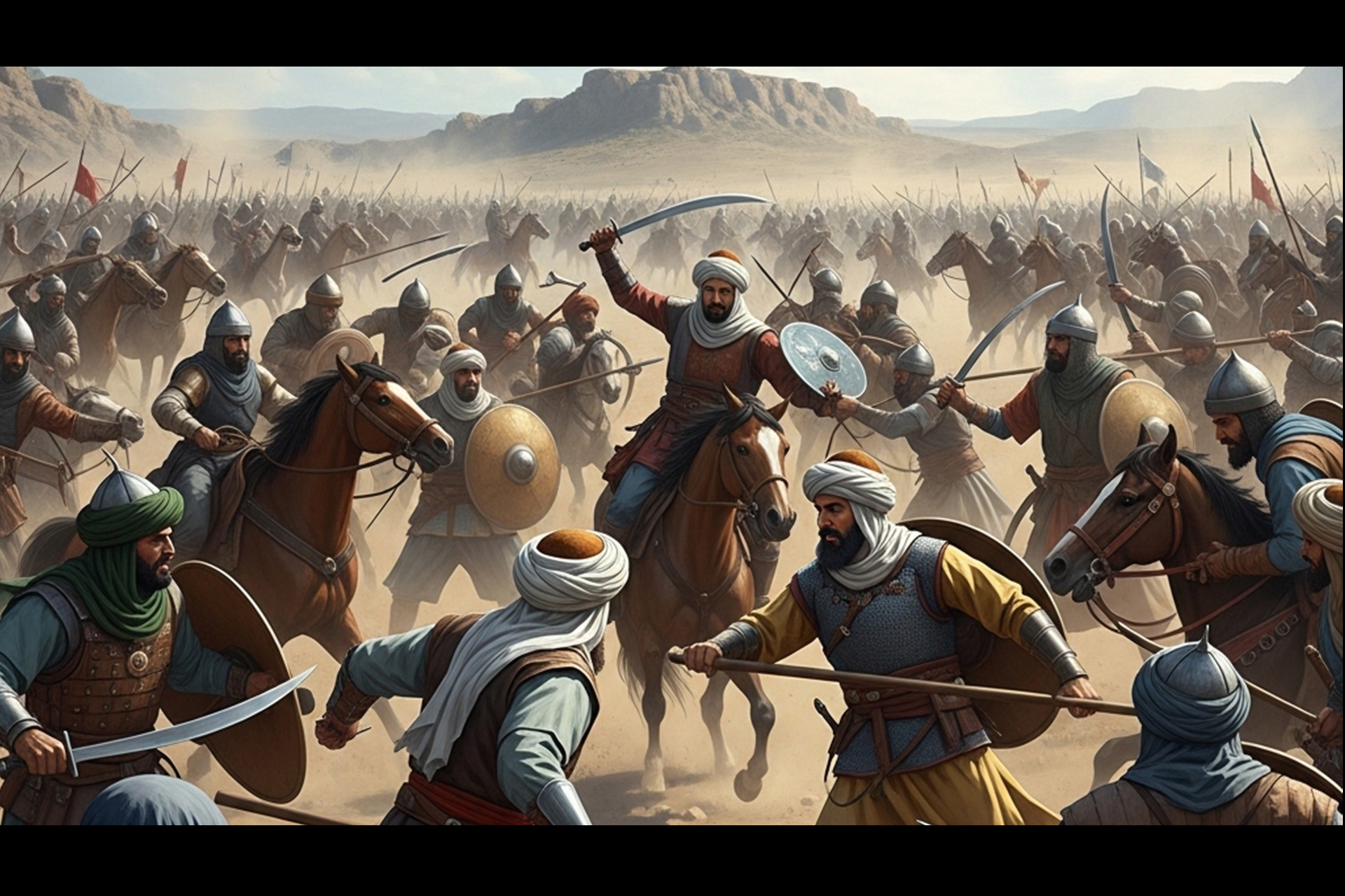
This preposterous misidentification was invented by the person most condemned by the ḥadīth in question: the leader of the transgressing group, Muʿāwiya ibn Abī Sufyān. When ʿAmmār was martyred at the Battle of Ṣiffīn (37 H), fighting in the army of ʿAlī ibn Abī Ṭālib against the forces of Muʿāwiya, ʿAmr ibn al-ʿĀṣ reminded Muʿāwiya of the Prophet’s (PBUH) saying, “Woe to you, son of Sumayyah! The transgressing group will kill you.” Muʿāwiya angrily replied, “Did we kill him? It was only ʿAlī and his companions who killed him. They brought him here until they cast him right under our spears/swords.” This incident is reported in one of the earliest compilations of ḥadīth, which is that of Maʿmar ibn Rāshid (d. 153).[8] The account is reported by many other early scholars, including Ibn Saʿad[9] (d. 230) and Aḥmad ibn Ḥanbal (d. 241).[10]
This is not a serious interpretation of the ḥadīth but is more of an attempt to make a mockery of it. When ʿAlī heard of this deliberate, frivolous misidentification, he aptly responded that if this were a sound argument, then it would also be correct to say that the Prophet (PBUH) and his companions were the killers of Ḥamza, the Prophet’s uncle. Following Muʿāwiya’s reasoning, Ḥamza would not have been martyred had he not gone out with the Muslim army to fight the enemy.[11] Imām ʿAlī’s reference to Ḥamza in particular, rather than any other martyr, is for a reason. After Ḥamza’s martyrdom in the Battle of Uḥud, Muʿāwiya’s mother, Hind Bint ʿUtba, mutilated his body, chewed his liver, and then spat it out.[12] She did that in revenge for the killing of her father, brother, and uncle in the Battle of Badr, which had taken place about a year before Uḥud.
Unsurprisingly, the vast majority of scholars—including those who hold Muʿāwiya in high esteem, such as Ibn Taymiyya (d. 728 H)[13]—have rejected this misidentification. If Muʿāwiya’s twisted reasoning were taken seriously, the responsibility for murder could be shifted from the actual culprits to innocent parties through mere semantic manipulation, as ʿAlī illustrated.
Ibn Qayyim al-Jawziyya (d. 751), Ibn Taymiyya’s student, also reported Muʿāwiya’s attribution of the responsibility for murdering ʿAmmār to ʿAlī and ʿAlī’s response to it. He confirmed that this shifting of blame is false and illogical. However, he attributed that false argument to “the people of Syria,” rather than Muʿāwiya, and its refutation to “those who are more worthy of the truth,” rather than ʿAlī.[14] Such is his commitment to defending Muʿāwiya and his determination not to accept the significance of this direct comparison between Muʿāwiya’s dishonesty and ʿAlī’s truthfulness. This is just one example of why one has to carefully examine any statements and arguments that Ibn Qayyim and Ibn Taymiyya make about ʿAlī, Muʿāwiya, Muʿāwiya’s rebellion against ʿAlī, Shīʿīs, or Shīʿism. Unfortunately, such deliberate anonymisation is rather more common among Umayyad-leaning scholars than is known or acknowledged.
2.2 Accusing Other Groups
Some scholars have tried to deny the ḥadīth its meaning and significance by identifying the “transgressing group” with a group other than Muʿāwiya’s army. One such attempt is the claim that it refers to the Meccan polytheists who tortured ʿAmmār, even though the ḥadīth was uttered in Medina after the migration from Mecca and is clearly a future prophecy. One scholar who offered this opinion is the ḥadīth scholar Ibn Baṭṭāl (d. 449). His only argument to support this clear misidentification is that since the ḥadīth states that ʿAmmār calls the transgressors to Allah and the transgressors call him to the Fire, the transgressors could not be Muslims.[15] Ibn Baṭṭāl certainly knew that embracing Islam does not necessarily result in the person becoming a true Muslim, consistently acting in an Islamic manner, or being immune to committing major sins.
Another equally absurd view identifies the “transgressing group” with the Khawārij. Yet the latter appeared after the Battle of Sīffīn, in which ʿAmmār was killed, as critically noted, for example, by Ibn Ḥajar (d. 852).[16]
Only desperation to exonerate Muʿāwiya would make learned scholars adopt such preposterous identifications of the “transgressing group.”
3 Method 2: Rejecting the Ḥadīth’s Authenticity
The second method to undermining the ḥadīth takes two forms: citing early scholars who rejected its authenticity, and denying that the ḥadīth in al-Bukhārī’s Ṣaḥīḥ contains the specific portion regarding ʿAmmār being killed by a transgressing group.
3.1 Scholars’ Denial of Authenticity
In support of this argument, it is often said that Aḥmad ibn Ḥanbal was heard denying its authenticity. Aḥmad’s opinion is seen as particularly important because Ahl al-Ḥadīth consider him a major authority. But Aḥmad is also reported to have confirmed that it is authentic.[17] The latter must be Aḥmad’s true position because he mentioned the ḥadīth seventeen times in his Musnad, reporting it through five companions: the Mother of Believers Umm Salama, Abū Saʿīd al-Khudrī, Khuzayma ibn Thābit, ʿAmr ibn al-ʿĀṣ, and ʿAbd Allah ibn ʿAmr ibn al-ʿĀṣ.
3.2 Al-Bukhārī’s Position
The second form of attacking the ḥadīth’s authenticity is claiming that al-Bukhārī did not authenticate the phrase “The transgressing group will kill him.” This claim is based on manuscripts of al-Bukhārī’s Ṣaḥīḥ that contain the ḥadīth without that phrase. This is a truly desperate attempt for several reasons.
First, most of the known and published manuscripts of the Ṣaḥīḥ of al-Bukhārī contain this phrase. The claim that al-Bukhārī did not authenticate it seems to go back to no earlier than the fifth century. The earliest mention I have found is by al-Bayhaqī (d. 458), who lived two centuries after al-Bukhārī.[18] However, al-Bayhaqī himself mentioned the ḥadīth in its famous and complete form, as found in the published editions of al-Bukhārī, as proof of the prophethood of Muḥammad (PBUH). He also reported the full ḥadīth in his ḥadīth compilation via Umm Salama and ʿAmr ibn al-ʿĀṣ, in addition to Abū Saʿīd al-Khudrī.[19]
Another late fifth-century scholar who mentioned this claim was Abū ʿAbd Allah al-Ḥamīdī (d. 488). In a work in which he compared the Ṣaḥīḥs of al-Bukhārī and Muslim, he wrote:
In this ḥadīth, there is a well-known addition that al-Bukhārī did not mention at all in the two chains of transmission for this ḥadīth. Perhaps it did not reach him through these two, or it did reach him, but he omitted it for a specific purpose he intended.[20]
Interestingly, al-Ḥamīdī mentions the possibility that al-Bukhārī himself chose to remove that phrase without explanation. Ibn Ḥajar also suggested that al-Bukhārī deliberately omitted it, reasoning that in another chain of transmission, Abū Saʿīd al-Khudrī states he was told the phrase by one of his companions rather than hearing it directly from the Prophet (PBUH). There are multiple problems with this explanation, one being that this specific chain of transmission does not meet al-Bukhārī’s own criteria, as Ibn Ḥajar himself concedes![21] Of course, the only plausible reason to remove such a highly mutawātir phrase would be its political and doctrinal significance. However, there remains no definitive evidence that al-Bukhārī himself omitted the phrase.
Second, the phrase “The transgressing group will kill him” is found in the Ṣaḥīḥ of Muslim. All of a sudden, Ahl al-Ḥadīth are not only disregarding most manuscripts of al-Bukhārī but also the wording in Muslim, even though they are usually against questioning any ḥadīths in these two collections.
Third, the Prophet Muḥammad’s saying about ʿAmmār being killed by the transgressing group is not only found in al-Bukhārī and Muslim, nor is it only narrated by Umm Salama and Abū Saʿīd al-Khudrī. In fact, it is one of the most widely transmitted narrations, having been reported by a large number of companions. I have discussed this in more detail in my article A Prophecy of Profound Significance.
Fourth, the ḥadīth was even transmitted by ʿAmr ibn al-ʿĀṣ and his son, ʿAbd Allah. The former was Muʿāwiya’s right hand, and his son was also in the rebellious group. It is illogical to think that they could have fabricated a ḥadīth that so heavily condemns them. Furthermore, Muʿāwiya himself did not deny the ḥadīth when it was mentioned to him, as we have discussed.
Even Ibn Taymiyya, a staunch defender of Muʿāwiya, rejected the argument of weakening the ḥadīth or questioning its authenticity. After noting that many manuscripts of al-Bukhārī lack the full ḥadīth, he goes on to say, “The scholars of ḥadīth do not differ in their view that this addition is indeed part of the ḥadīth.”[22]
Fifth, there’s another important observation that exposes the flimsiness of the claim that the ḥadīth doesn’t contain the phrase “The transgressing group will kill him.” Without this phrase, the two versions of the ḥadīth in al-Bukhārī would be as follows: “Woe to ʿAmmār, he invites them to Paradise, and they invite him to the Fire” and “Woe to ʿAmmār, ʿAmmār invites them to Allah, and they invite him to the Fire.” But this makes singling out ʿAmmār in this ḥadīth meaningless, since all the early Muslims were inviting people to Paradise and to Allah! The phrase “invites them to Allah/ Paradise” is directly linked to the phrase about him being killed by the transgressing group, which gives it context. The people ʿAmmār was inviting to Allah were the transgressing group.
4 Method 3: The “Ijtihād” Pretext
I will now discuss in detail the third and most common form of mishandling and misusing this ḥadīth: undermining and diminishing the significance of the Prophet’s (PBUH) description of Muʿāwiya and his followers as a transgressing group that calls to the Fire. This is done by claiming that Muʿāwiya’s refusal to pledge allegiance to ʿAlī was a genuine act of ijtihād (independent reasoning). Muʿāwiya’s supposed ijtihād was his refusal to accept the caliphate of ʿAlī until he handed the killers of ʿUthmān over to him to avenge his assassination. On the other hand, Imām ʿAlī’s ijtihād was his decision not to seek and punish the assassins then. It is argued that Muʿāwiya’s reasoned analysis of the situation was wrong, while ʿAlī’s reasoning was right. Thus, ʿAlī gets two rewards for his correct reasoning, while Muʿāwiya gets one reward for his incorrect reasoning.[23] In other words, this view admits that the ḥadīth identifies Muʿāwiya and his followers as the “transgressing group.” But the suggestion that their rebellion was nothing more than wrong ijtihād presents leading a transgressing group that calls to the Fire as an act of rewardable ijtihād! As incredible as it sounds, this is actually the position of countless scholars.
I will now present eight arguments, each of which is sufficient to refute this attempt to empty the ḥadīth of its significant implications.
4.1 Muʿāwiya Did Not Claim Ijtihād
Muʿāwiya’s refusal to pledge allegiance to Imām ʿAlī has absolutely nothing to do with what Muʿāwiya’s apologists claim was ijtihād. It was not about interpreting a verse, analysing a ḥadīth, addressing a legal issue, or any such Islamic deliberations that fall under ijtihād. When ʿAlī became caliph, he decided to dismiss all the regional governors he inherited. Muʿāwiya refused the decision to dismiss him from the governorship of Syria, so he declared his refusal to pledge allegiance to the Caliph, whom the Muslims had sworn allegiance to.
Muʿāwiya claimed that his position is driven by tribal loyalty to avenge ʿUthmān’s death, being from the same clan, Banū Umayya. This position has nothing to do with ijtihād. When scholars describe Muʿāwiya’s conflict with ʿAlī as ijtihād, they contradict Muʿāwiya’s own words. This shows the determination of Muʿāwiya’s apologists to vindicate him and justify his untenable position.
4.2 A Blatant Lie
A condition for ijtihād is good intention, yet Muʿāwiya lied when claiming that he refused to pledge allegiance to the Caliph because Imām ʿAlī did not avenge the killers of ʿUthmān. While some might have been deceived by Muʿāwiya’s cunning argument at the time, there is no excuse for anyone who lived after Muʿāwiya installed himself as “the first of the kings” of the Muslims, as he described himself.[24] He never sought retribution from ʿUthmān’s killers, even though he built his entire political history of rebellion against Imām ʿAlī on that pretext. When the now-king Muʿāwiya arrived in Medina and visited ʿUthmān’s family, his daughter, ʿĀʾisha, started crying for her father. Muʿāwiya understood what she wanted, so he responded as follows:
My niece, the people have given us their obedience, and we have given them our protection. We have shown them forbearance that masks our anger, and they have shown us obedience that masks their grudge. Each man has his sword by his side, and he knows exactly where his supporters stand.
If we break our word to them, they will break theirs to us. We do not know if the outcome would favour us or go against us. Surely, for you to be a cousin of the Commander of the Believers is better than becoming just another woman among the common Muslims.[25]
Clearly, Muʿāwiya persistently lied when claiming that he refused to pledge allegiance to ʿAlī because ʿAlī did not seek retribution from ʿUthmān’s killers. His rebellion against the Caliph, which led to the shedding of the blood of tens of thousands of Muslims, was caused by nothing but Imām ʿAlī’s dismissal of him from his position and Muʿāwiya’s craving for power. Defenders of Muʿāwiya justify his actions by citing the unfulfilled demand he raised during his rebellion against Imām ʿAlī, ignoring that it was exposed as a mere pretext once he became monarch.
Ironically, scholars who meticulously look left and right for a sniff of an innovation (bidʿa) to vehemently denounce it, either ignore Muʿāwiya’s introduction of kingship into Islam or, even worse, praise it as if it were a merit, as Ibn Taymiyya did:
Scholars have agreed that Muʿāwiya is the best of the kings of this nation. For the four before him were Caliphs of prophethood, and he was the first of the kings. His rule was one of kingship and mercy.[26]
Those who venerate Muʿāwiya’s forcing of kingship into Islam know that one of its most corrupt fruits was his appointment of his son, Yazīd, to succeed him. The latter was among the most corrupt and tyrannical rulers in Muslim history.
As for Ibn Taymiyya’s claim that there was scholarly agreement on the praises he bestowed on Muʿāwiya’s rule, this is an outright lie that anyone with the slightest knowledge of history and ḥadīth can recognise; it ignores a vast number of Muslim scholars. This is but one proof that Ibn Taymiyya, like other apologists for Muʿāwiya, misinterprets and even rewrites history to fit his creed. Such scholars are not historians, but theologians and polemicists who use history to promote specific doctrines. As we have seen, they are even willing to distort ḥadīth—the very tradition they claim to defend.
The fact that Muʿāwiya never sought retribution from ʿUthmān’s killers reveals that he was merely using Imām ʿAlī’s refusal to hand them over as a pretext. Indeed, Muʿāwiya’s reply to ʿUthmān’s daughter implies that he knew who the killers were but chose to leave them unpunished, and even offered them protection, in exchange for their allegiance. Furthermore, he would not have pardoned those killers had they been connected to ʿAlī in any way. If either ʿAlī or Muʿāwiya had a hand in the assassination of ʿUthmān or colluded with his killers, it must have been Muʿāwiya.
4.3 The Gravity of Transgression
Describing Muʿāwiya’s position as a type of rewarded ijtihād contradicts the gravity of the description of his side in the ḥadīth. The Prophet (PBUH) did not describe ʿAmmār’s killers in a neutral term, let alone present them as a group of well-intentioned scholars, as Muʿāwiya’s apologists do. He called them bāghiya (transgressing), a seriously condemnatory term.
Allah uses the term baghy (transgression) to describe the act of disbelieving in what He revealed because the disbeliever wanted it to be revealed to someone else:
Evil is that for which they have sold their souls, that they should disbelieve in that which Allah has sent down, out of transgression that Allah should send down of His grace upon whom He wills of His servants. Thus, they have incurred wrath upon wrath; and for the disbelievers is a humiliating torment (al-Baqara 2:90).
Notably, the transgression mentioned in this verse is similar to the rebellion of Muʿāwiya and his soldiers. Both parties desired a favour that Allah had bestowed upon others.
Allah also used this term to describe Pharaoh and his soldiers’ pursuit of Moses and his people, as it was an unjust pursuit:
And We took the Children of Israel across the sea, and Pharaoh and his soldiers pursued them in transgression and injustice (Yūnus 10:90).
This is another example:
Indeed, Allah orders justice, kindness, and giving to relatives. He forbids immorality, reprehensible conduct, and transgression. He admonishes you that you may be mindful (al-Naḥl 16:90).
Acting immorally or behaving reprehensibly can never be classified as ijtihād; the same holds true for committing acts of transgression. Calling Muʿāwiya’s transgression ijtihād shows that his apologists are willing to even ignore and distort what the Qur’an says about transgression. The ḥadīth’s description of Muʿāwiya’s side as calling to Hellfire confirms the gravity of their transgression and is, thus, entirely aligned with the Qur’an’s use of this term.
Scholars, including those who praise Muʿāwiya, agree that the following verse applies to the conflict between Imām ʿAlī and his followers on one side, and Muʿāwiya and his army on the other:
And if two groups of believers should fight each other, then make peace between them. But if one of them transgresses against the other, then fight against the one that transgresses until it returns to the ordinance of Allah. If it returns, then make peace between them justly and act with justice. Indeed, Allah loves those who act with justice (al-Ḥujurāt 49:9).
According to the Qur’an, and indeed common sense, violent transgression is a major sin that poses a profound threat to Muslims individually and collectively. Had such transgression not been so consequential, Allah would not have commanded the believers to fight the transgressors until they end their disobedience.
Muʿāwiya’s rebellion against the Caliph resulted in the killing of tens of thousands of Muslims. The figure cited by most sources is seventy thousand.[27] The flimsy claim that this massive bloodshed resulted from an innocent, well-intentioned ijtihād is nothing but an attempt to exonerate Muʿāwiya from his grave crimes. Such a defence is devoid of any sound Islamic basis, logical consistency, or fundamental humanity.
4.4 The Chief Transgressor’s Responsibility
The Prophet (PBUH) did not ascribe the killing of ʿAmmār and transgression only to the individual who struck the fatal blow against ʿAmmār, Abū al-Ghādiya al-Juhanī; rather, he extended them to the entire group he was a part of, which is all of Muʿāwiya’s followers. Naturally, anyone who leads a group of people to good or evil gets a greater share of that good or evil than any individual follower, as the Prophet (PBUH) said:
Whoever initiates a good practice in Islam will have its reward and the reward of whoever acts upon it after him, without any of their rewards being diminished. Whoever initiates a bad practice in Islam will bear its sin and the sin of whoever acts upon it after him, without any of their sins being diminished.[28]
Even though Abū al-Ghādiya al-Juhanī was ʿAmmār’s physical killer, Muʿāwiya was his metaphorical murderer. Everyone who supported Muʿāwiya in the fighting was a transgressor, but Muʿāwiya was the chief transgressor. For this reason, I believe no title fits him better than the “Commander of the Transgressors.” Muʿāwiya’s bloody mutiny against Imam ʿAlī was a rebellion by the “Commander of the Transgressors” against the “Commander of the Believers.”
It is also critical to note that Abū al-Ghādiya al-Juhanī was himself a companion, just as Muʿāwiya was. To categorise these two “companions” in the same sense as ʿAlī and ʿAmmār is a complete distortion of the concept of companionship of the Prophet (PBUH). This distortion is further compounded by the doctrine of universal righteousness for all companions. These are but two of the deeply damaging legacies of the pseudo-Islamic, corrupt, dynastic political environment that Muʿāwiya established and ensured its survival and development for decades after his death. It is beyond ironic how Sunni scholars reject the Shīʿī doctrine of the infallibility of the twelve Imams, yet simultaneously bestow inherent righteousness upon tens of thousands of Muslims! Both doctrines stand in defiance of the Qur’an, authentic ḥadīth, and the record of history.
4.5 The Transgression That Never Ceased
I would like to offer an observation that, to the best of my knowledge, has not been previously addressed in the literature on this subject. Verse 49:9 commands Muslims to fight the transgressing faction until it ceases its transgression, “fight against the one that commits aggression until it returns to the ordinance of Allah.” However, Muʿāwiya’s rebellious group never returned to Allah’s command. Insufficient numbers of Muslims stood with Imām ʿAlī against Muʿāwiya. Furthermore, factions within ʿAlī’s own army turned against him—opposing his decisions, sowing division, and weakening him both politically and militarily. Some even took up arms against him, becoming known as the Khawārij.
Muʿāwiya, conversely, attracted those who sold their religion for worldly gain, of whom there were many. During his two decades as governor, he accumulated the resources necessary to buy loyalties. Five years after Muslims pledged allegiance to Imām ʿAlī as the Commander of the Believers, he was martyred; meanwhile, Muʿāwiya lived for another two decades as the Commander of the Transgressors.
Al-Ḥasan, the Prophet’s grandson, was sworn in as Caliph in succession to his father. However, Muʿāwiya, having already rejected ʿAlī’s legitimacy, had no intention of accepting al-Ḥasan’s caliphate, nor of abandoning his longstanding lust for the highest office. Al-Ḥasan recognised that Muʿāwiya was bent on spilling as much blood as needed to fulfil his ambitions. He also realised that he could not avoid this outcome, given he was in an even weaker political and military position than his father had been. Consequently, to prevent further bloodshed, he ceded the caliphate to Muʿāwiya after six months, in the year 41 H.
Ironically, Muʿāwiya’s years of rebellion, treachery, and violence to secure his position as the first king of the Muslims resulted in the very year of his triumph being termed ʿĀm al-Jamāʿa (The Year of Unity). This serves as yet another example of how Muʿāwiya fostered an environment where even the most basic historical facts and concepts could be systematically inverted. In such an environment, truth itself is compromised; anything and everything can now be pressed into the service of the king.
It must be stressed again: the transgression of Muʿāwiya and those who followed him was not a passing event or temporary situation. Rather, it was a sustained mutiny that ultimately prevailed over legitimacy and justice. It established a new, secular political system—one with no precedent in Islam and no basis in its teachings. Catastrophically, it gave birth to a politically driven culture masquerading as Islamic. In reality, it abolished and replaced the framework established by the Prophet (PBUH). Consequently, the study of Islamic history and religious sciences—including ḥadīth, exegesis (tafsīr), and creed (ʿaqīda)—must account for this reality and actively deconstruct its influences. This is the legacy that Muʿāwiya’s apologists audaciously frame as the result of ijtihād!
4.6 A Transgressor is Neither Righteous Nor Just
As already discussed, bāghī means transgressor, rebel, or oppressor—essentially, various manifestations of being “unjust”. This is a fundamental linguistic point on which no two people should disagree. Muʿāwiya’s transgression, which the Prophet (PBUH) foretold three and a half decades before its occurrence, never ceased, as we have observed. Therefore, the inclusion of Muʿāwiya in the doctrine that “all companions are righteous and just” constitutes a rejection of the Prophetic ḥadīth. Indeed, this preposterous doctrine was invented to provide cover for Muʿāwiya and other unjust individuals.
4.7 ʿAlī is the Guardian of the Believers
Among the Prophet’s (PBUH) sayings regarding Imām ʿAlī is his address to the Muslims at Ghadir Khumm, when he asked, “Do you not know that I have more authority over every believer than they have over themselves?” They replied, “Yes, we bear witness that you have more authority over every believer than they have over themselves.” He then declared, “Then for whomever I am a guardian, this is his guardian,” and he took ʿAlī’s hand.
This ḥadīth has been recorded by many scholars, including Aḥmad ibn Ḥanbal,[29] al-Bazzār (d. 292),[30] al-Nasāʾī (d. 303),[31] Abū Yaʿlā (d. 307),[32] and al-Ṭabarānī (d. 360).[33] Ibn Abī ʿĀṣim (d. 287) reported it via eleven companions, and he also documented a ḥadīth in which thirteen unnamed collectively testified to having heard the Prophet (PBUH) utter those specific words regarding ʿAlī.[34] In other words, this ḥadīth is mutawātir.
Naturally, while the Prophet (PBUH) was alive, he was the guardian, and all Muslims followed his commands. It is clear, therefore, that the Prophet’s statement was an instruction for the Muslims to follow Imām ʿAlī after his death. This is further confirmed by the fact that he (PBUH) issued this declaration regarding ʿAlī only two months before his passing. How can Muʿāwiya’s defiance of the Prophet’s command be described as ijtihad? Defying the Qur’an or the Prophet (PBUH) is an act of disobedience, not ijtihad.
4.8 Irreconcilable Opposites
The assertion that Imām ʿAlī and Muʿāwiya both engaged in ijtihad—even if ʿAlī was correct and Muʿāwiya was mistaken—and that they were both righteous, is an a priori doctrinal claim that ignores not only ḥadīth, but historical reality as well. Imām ʿAlī grew up in the Prophet’s (PBUH) household from the age of six or seven. The Prophet (PBUH) raised him and shielded him from the culture and religion of the Quraysh. He was unique among the companions in that he never worshipped idols, which is why he is the only companion honoured with the expression, “May Allah honour his face.”
He was the first to embrace Islam and to pray with the Prophet (PBUH). The Prophet (PBUH) married his most beloved daughter, Fāṭima, to him, “Verily, Allah has commanded me to marry Fāṭima to ʿAlī.”[35] He never once disobeyed the Prophet (PBUH) in any matter. He was the Prophet’s (PBUH) first companion and the last to leave him, washing his blessed body and laying him to rest. His companionship with the Prophet (PBUH), both spiritual and physical, lasted more than two and a half decades without interruption.
Muʿāwiya, in contrast, spent his youth vehemently fighting the Prophet (PBUH) and Islam. He only embraced Islam in his mid-twenties, following the conquest of Mecca. Like other anti-Muslim Meccans, he realised that the violent opposition to Islam—which his father, Abū Sufyān, and other leaders of the Quraysh had led and in which he had fully participated—had run its course. Consequently, he was a Muslim for only the final two and a half years of the Prophet’s (PBUH) life. To grant him the title of “companion” is a trivialisation of history and reflects ignorance of the profound meaning of Prophetic companionship. This was a unique spiritual bond that cannot be acquired through mere physical association, as one might with worldly companionship.
Not only did scholars grant him the title of companion, but they also claimed he became a scribe of the Qur’an. A man with his history of hostility towards the Prophet (PBUH) and Islam is the last person who would be entrusted with such a task. The falsehood of this claim is confirmed by the fact that there had been scribes of the Qur’an for twenty years before Muʿāwiya embraced Islam; what need, therefore, would the Prophet (PBUH) have for a new scribe at that late stage?
A comparison between the different wordings of a certain ḥadīth is instructive. The Prophet (PBUH) sent Ibn ʿAbbās, then a small boy, to summon Muʿāwiya. Some versions of the ḥadīth describe Muʿāwiya as “his scribe”,[36] perhaps meaning a scribe of correspondence, not revelation. Another version states, “he wrote the revelation”.[37] However, the text of this ḥadīth in the Ṣaḥīḥ of Muslim does not describe Muʿāwiya as writing revelation or anything else for the Prophet; indeed, it contains a rebuke. When Ibn ʿAbbās returned, he told the Prophet (PBUH), “He is eating,” meaning Muʿāwiya did not cease his meal to respond immediately to the Prophet’s (PBUH) summons. The Prophet (PBUH) then supplicated against him, saying, “May Allah never fill his stomach”![38] One would not treat a friend, a guest, or even a complete stranger with the disrespect Muʿāwiya showed the Prophet (PBUH). It is a simple truth that a person who spent years at war with the Prophet would not have suddenly become respectful or well-mannered towards him—especially after opportunistically embracing Islam only once open hostility had proved futile.
It is no surprise that the conduct of Imām ʿAlī and Muʿāwiya in the post-Prophetic era was entirely contradictory; it was a direct reflection of the different environments in which they were raised, the values they upheld, and the lives they led. ʿAlī’s household was one of prophethood, revelation, Islam, piety, truthfulness, and trustworthiness; meanwhile, Muʿāwiya’s was one of polytheism, disbelief, deception, and treachery. To use the honorific “may Allah be pleased with him” for Muʿāwiya, as is done for Imām ʿAlī and other genuine companions, is a clumsy attempt to reconcile two men who were as different as they could be. One must choose between ʿAlī and Muʿāwiya—between the Commander of the Believers (may Allah honour his face) and the Commander of the Transgressors, whom the Prophet (PBUH) described as an inviter to the Fire. Praising both is irrational and contradictory.
I must clarify that this critical comparison is not driven by Shīʿī sectarianism. I am not Shīʿī, as I disagree with fundamental tenets of Shīʿism, such as the infallibility of the twelve Imams. Even setting ḥadīth aside, this assessment represents a natural reading of history accessible to any reader, be they Shīʿī, Sunni, Ashʿarī, Muʿtazilī, Salafī, Sufi, or of any other persuasion, or even if they are non-Muslim or an atheist. While it carries profound religious implications, it can be treated as a purely historical matter. An individual raised by the Prophet Muḥammad (PBUH) and another raised by Abū Sufyān could not be more different. Then, of course, there are the Qur’an and ḥadīth that enforce this analysis.
These are some of the arguments that completely undermine the view that Muʿāwiya was nothing more than a scholar who made a mistaken effort at ijtihad. Those who characterise Muʿāwiya’s position as innocent, mistaken ijtihad might well be ignorant of some of these arguments, but it is difficult to think they could be ignorant of them all. This includes one of the chief apologists for Muʿāwiya, Ibn Taymiyya, who wrote dozens of pages in his book Minhāj al-Sunna al-Nabawiyya, as well as in other works, defending Muʿāwiya and justifying his bloody rebellion. Rather than admitting that Muʿāwiya’s sole motive was to seize power, Ibn Taymiyya elaborated on arguments favouring Muʿāwiya’s position over Imām ʿAlī’s, often suggesting that Muʿāwiya possessed a wisdom that ʿAlī lacked.
While discussing Ibn Taymiyya’s hostility towards ʿAlī and the Prophet’s family is beyond the scope of this article, I would like to quote one of his statements to demonstrate how, even when sugar-coating his resentment, he advocates a form of discrimination against them:
There is no doubt that it is not permissible to curse any of the companions—neither ʿAlī, nor ʿUthmān, nor anyone else. Whoever curses Abū Bakr, ʿUmar, or ʿUthmān is a greater sinner than one who curses ʿAlī.[39]
In this statement, which lacks any basis in the Qur’an or Sunna, Ibn Taymiyya responds to the Shīʿī practice of cursing the first three caliphs with a “creative” Sunni animosity towards ʿAlī. He also cunningly underplays the seriousness of Muʿāwiya’s introduction of the Umayyad tradition of cursing ʿAlī from the pulpits—a practice that is well documented, including by Muslim in his Ṣaḥīḥ.[40] Furthermore, he attributes the tradition of cursing ʿAlī, which went on for six decades before it was banned by ʿUmar ibn ʿAbd al-ʿAzīz (d. 101),[41] simply to “some of the Umayyads,”[42] concealing the fact that it was Muʿāwiya who initiated and established it. The closest he could come to the truth is to ascribe this practice to say that it was “common among the followers of Muʿāwiya.”[43] This serves as another example of the anonymisation method I mentioned earlier in relation to Ibn al-Qayyim, where specific accountability is dissolved into a nameless collective.
Another indication of Ibn Taymiyya’s true sentiments towards the Prophet’s family is his view on Yazīd ibn Muʿāwiya. He went against the weight of evidence and common sense to claim that Yazīd did not order the killing of Imam Ḥusayn, the Prophet’s beloved grandson. He still conceded that Yazīd committed mass murders and other heinous crimes in both Medina and Mecca. Yet, his final verdict on the man is that, “He is not to be cursed, nor is he to be loved.”[44] It is revealing that the same scholar who counselled this moderation and neutrality towards Yazīd is the very same scholar who ruled that Muslims who insist on pronouncing the prayer intention aloud should be put to death![45] This stark comparison alone speaks volumes about Ibn Taymiyya’s mindset, biases, and theological priorities.
5 Summary
The Prophet’s (PBUH) prophecy that ʿAmmār ibn Yāsir would be killed by a “transgressing group” is a remarkable miracle. By specifically labelling ʿAmmār’s murderers as such, this fulfilled prophecy provides a Prophetic rubric for interpreting one of the most, if not the most, tumultuous eras in Islamic history. Yet, this exposition of the reality of Muʿāwiya ibn Abī Sufyān’s rebellion against the Caliph ʿAlī ibn Abī Ṭālib was ignored, obfuscated, or rejected by those who chose the riches of this world over following the commands of the Qur’an and the Prophet (PBUH), by siding with Muʿāwiya rather than supporting ʿAlī.
Muʿāwiya’s ultimate military victory established a hereditary political system that mirrored his own values and priorities. This secular political reality was born from a mutiny against a legitimate Caliph who was guided solely by the teachings of the Qur’an and the example of the Prophet (PBUH). It was within the constraints of this pseudo-Islamic environment that scholars developed the various Islamic sciences. While some successfully resisted these political demands, others succumbed, leading to the deep contradictions found in historical literature, ḥadīth, and tafsīr. These contradictions eventually seeped into derivative sciences such as creed and jurisprudence.
The literature surrounding the “transgressing group” ḥadīth serves as a perfect case study of the lasting effects of Muʿāwiya’s military and cultural coup. The effort to recast Muʿāwiya and his successors as genuine Islamic leaders necessitated the attempt to either deny the authenticity of this ḥadīth or strip it of its meaning. I have reviewed the three methods used to achieve this, along with their accompanying pretexts and stratagems. Ironically, the proponents of these distortions often boast of being the “Ahl al-Ḥadīth.” Yet, their driving motive is not understanding the ḥadīth, but an unconditional defence of Muʿāwiya, the commander of the transgressors, in an effort to downplay his rebellion against ʿAlī, the Commander of the Believers. This defence extends to justifying the usurpation of Muslim rule and the introduction of a hereditary monarchy.
Muʿāwiya’s success in imposing his rebellion has had immense consequences that Muslims continue to endure today. Muʿāwiya’s historical role and legacy must be fully analysed and understood apart from any theological cover. It is my firm conclusion that only then would it be possible to accurately identify and eliminate the forgeries, false information, and foreign elements that were introduced into Islamic teachings.
References
Abū Yaʿlā al-Mawṣillī, Aḥmad. Al-Musnad, edited by Ḥusayn Asad (Damascus: Dār al-Maʾmūn Lil-Turāth, 1986).
Aḥmad ibn Ḥanbal. Al-Musnad, edited by Shuʿayb al-Arnaʾūṭ et al. (Beirut: Muʾassasat al-Risāla, 1995-2001).
Al-Bayhaqī, Aḥmad ibn al-Ḥusayn. Al-Sunan al-kubrā, edited by Muḥammad ʿAṭā (Beirut: Dār al-Kutub al-ʿIlmiyya, 2003).
———. Dalāʾil al-nubuwwa wa-maʿrifat aḥwāl ṣaḥib al-sharīʿa, edited by ʿAbd al-Muʿṭī Qalʿachī (Beirut: Dār al-Kutub al-ʿIlmiyya, 1988).
Al-Bazzār, Abū Bakr Aḥmad. Al-Baḥr al-zakhkhār, edited by Maḥfūẓ Zayn Allāh, ʿĀdil ibn Saʿd and Ṣabrī Al-Shāfiʿī (Medina: Maktabat al-ʿUlūm wal-Ḥikam, 1988-2009).
Al-Bukhārī, Muḥammad. Al-Ṣaḥīḥ, edited by Muṣṭafā al-Bughā (Damascus: Dār Ibn Kathīr, 1993).
Al-Ḥamīdī, Abū ʿAbd Allah. Al-Jamʿ bayn al-ṣaḥīḥayn, edited by ʿAlī al-Bawwāb (Beirut: Dār Ibn Ḥazm, 2002).
Al-Jāḥiẓ, ʿAmr ibn Baḥr. Al-Bayān wal-tabyīn, (Beirut: Dār wa-Maktabat al-Hilāl, 1423 H).
Al-Khallāl, Abū Bakr Aḥmad ibn Muḥammad. Al-Sunna, edited by ʿAṭiyya al-Zahrānī (Riyadh: Dār ar-Rāya, 1989).
Al-Khaṭīb al-Baghdādī, Aḥmad ibn ʿAlī. Al-Kifāya fī ʿilm ar-riwāya, edited by Ibrāhīm al-Madanī (Hyderabad: Jimʿiyyat Dāʾirat al-Maʿārif al-ʿUthmāniyya, 1357 H).
Al-Nasāʾī, Aḥmad ibn Shuʿayb. Al-Sunan al-kubrā, edited by Ḥasan Shalabī (Beirut: Muʾssasat al-Risāla, 2001).
Al-Qurtubī, Muhammad. Al-Tadhkira bi-aḥwāl al-mawtā wa-umūr al-ākhira, edited by Al-Sādiq bin Ibrāhīm (Beirut: Maktabat Dār al-Minhāj lil-Nashr wal-Tawzī‘.
Al-Ṭabarānī, Sulaymān ibn Aḥmad. Al-Muʿjam al-ʾawsaṭ, edited by Ṭāriq Muḥammad and ʿAbd al-Muḥsin al-Ḥusaynī (Cairo: Dār Al-Ḥaramyn lil-Ṭibāʿa wal-Nashr, 1995).
———. Al-Muʿjam al-kabīr, edited by Ḥamdī al-Salafī (Cairo: Maktabat Ibn Taymiyya, 1433 H).
Ibn Abī ʿĀṣim, Aḥmad. Al-Sunna, (Damascus: Al-Maktab al-Islāmī, 1980).
Ibn Abī Shayba, ʿAbd Allāh. Al-Muṣannaf, edited by Saʿad al-Shathrī (Riyadh: Dār Kunūz Ishbīlya, 2015).
Ibn al-Athīr, Abū al-Ḥasan ʿAlī. Al-Kāmil fī al-tarīkh, edited by ʿUmar Tadmurī (Beirut: Dār al-Kitāb al-ʿArabī, 1997).
Ibn al-Ṣalāḥ, Abū ʿAmrū. ʿUlūm al-ḥadīth, edited by Nūr al-Dīn ʿAtr (Damascus: Dār al-Fikr, 1986).
Ibn Baṭṭāl, Abū al-Ḥasan. Sharḥ ṣaḥīḥ al-bukhārī, edited by Yāsir ibn Ibrāhīm (Riyadh: Maktabat al-Rushd, 2003).
Ibn Ḥajar al-ʿAsqalānī, Aḥmad. Fatḥ al-bārī bi-sharḥ al-bukhārī, edited by Muḥammad ʿAbd al-Bāqī (Cairo: Al-Maktaba al-Salafiyya, 1380-1390 H).
Ibn Qayyim al-Jawzīyya, Muḥammad. Al-Ṣawāʿiq al-mursala ʿalā al-jahmiyya wal-muʿaṭṭila, edited by Ḥusayn Ramaḍān (Riyadh: Dār ʿAṭāʾāt al-ʿIlm, 2020).
Ibn Qutayba al-Dīnawarī, Abū Muḥammad ʿAbd Allah. ʿUyūn al-akhbār, (Beirut: Dār al-Kutub al-ʿIlmiyya, 1418 H).
Ibn Saʿad, Muḥammad. Al-Ṭabaqāt al-kubrā, edited by ʿAlī ʿUmar (Cairo: Al-Khānjī, 2011).
Ibn Taymiyya, Taqiyy al-Dīn Aḥmad. Majmūʿ fatāwa, edited by ʿAbd al-Raḥmān ibn Muḥammad and Muḥammad ibn ʿAbd al-Raḥmān (Medina: Mujammaʿ al-Malik Fahad Li-Ṭibāʿat al-Muṣḥaf al-Sharīf, 2004).
———. Minhāj al-sunna al-nabawiyya, edited by Muḥammad Sālim (Riyadh: Jāmiʿat al-Imām Muḥammad ibn Sʿūd al-Islāmiyya, 1986).
Maʿmar ibn Rāshid. “Al-Jāmiʿ”. In Al-Muṣannaf (ʿAbd al-Razzāq al-Ṣanʿānī), edited by Ḥabīb al-Raḥmān Al-Aʿẓamī. Johannesburg: Al-Majlis al-ʿIlmī, 1983.
Muslim, Abū al-Ḥusayn. Al-Ṣaḥīḥ, edited by Muḥammad ʿAbd al-Bāqī (Cairo: Dār al-Ḥadīth, 1991).
Notes
[1] This article significantly expands on a video titled “Denying and Trivialising a Miraculous Ḥadīth to Exonerate Mu’awiya” that I published on my English YouTube channel on 4 September 2025 https://youtu.be/WfOSw6nrR30. A formatted, easier-to-read version of this article is available on my blog https://shorturl.at/Dp04m.
[2] Blog link https://shorturl.at/wYLIH; Facebook link https://shorturl.at/076Xf.
[3] Al-Bukhārī, Al-Ṣaḥīḥ, 436, 2812.
[4] Muslim, Al-Ṣaḥīḥ, 2915-2916.
[5] Al-Bukhārī, Al-Ṣaḥīḥ, just before 3449.
[6] Ibn al-Ṣalāḥ, ʿUlūm al-ḥadīth, 294.
[7] Ibid., 293; Al-Khaṭīb al-Baghdādī, Al-Kifāya, 50.
[8] Maʿmar ibn Rāshid, “Al-Jāmiʿ”, 20427.
[9] Ibn Saʿad, Al-Ṭabaqāt al-kubrā, vol. 3, 234.
[10] Aḥmad ibn Ḥanbal, Al-Musnad, 6499, 6926, 17778.
[11] Al-Qurtubī, Al-Tadhkira, vol. 3, 1089.
[12] Ibn Saʿad, Al-Ṭabaqāt al-kubrā, vol. 3, 9.
[13] Ibn Taymiyya, Minhāj al-sunna, vol. 4, 405-406.
[14] Ibn Qayyim al-Jawzīyya, Al-Ṣawāʿiq al-mursala, vol. 1, 29-30.
[15] Ibn Baṭṭāl, Sharḥ ṣaḥīḥ al-bukhārī, vol. 5, 27.
[16] Ibn Ḥajar al-ʿAsqalānī, Fatḥ al-bārī, 447.
[17] Al-Khallāl, Al-Sunna, 722.
[18] Al-Bayhaqī, Dalāʾil al-nubuwwa, vol. 2, 546.
[19] Al-Bayhaqī, Al-Sunan al-kubrā, 16786, 16789, 16790.
[20] Al-Ḥamīdī, Al-Jamʿ bayn al-ṣaḥīḥayn, 1794.
[21] Ibn Ḥajar al-ʿAsqalānī, Fatḥ al-bārī, 447.
[22] Ibn Taymiyya, Minhāj al-sunna, vol. 4, 415.
[23] This is the relevant ḥadīth, “If a judge gives a judgment using ijtihad and is correct, he has two rewards; and if he gives a judgment using ijtihad and is mistaken, he has one reward” (Al-Bukhārī, Al-Ṣaḥīḥ, 6919.)
[24] Ibn Abī Shayba, Al-Muṣannaf, 32746.
[25] Al-Jāḥiẓ, Al-Bayān wal-tabyīn, vol. 3, 200-201; Ibn Qutayba al-Dīnawarī, ʿUyūn al-akhbār, vol. 1, 67.
[26] Ibn Taymiyya, Majmūʿ fatāwa, vol. 4, 436-437.
[27] Ibn Abī Shayba, Al-Muṣannaf, 40666.
[28] Muslim, Al-Ṣaḥīḥ, 1017.
[29] Aḥmad ibn Ḥanbal, Al-Musnad, 967.
[30] Al-Bazzār, Al-Baḥr al-zakhkhār, 786.
[31] Al-Nasāʾī, Al-Sunan al-kubrā, 8415.
[32] Abū Yaʿlā al-Mawṣillī, Al-Musnad, 6423.
[33] Al-Ṭabarānī, Al-Muʿjam al-ʾawsaṭ, 2254.
[34] Ibn Abī ʿĀṣim, Al-Sunna, 1354-1376.
[35] Al-Ṭabarānī, Al-Muʿjam al-kabīr, 10305.
[36] Aḥmad ibn Ḥanbal, Al-Musnad, 2651, 3104.
[37] Al-Bayhaqī, Dalāʾil al-nubuwwa, vol. 6, 243.
[38] Muslim, Al-Ṣaḥīḥ, 2604.
[39] Ibn Taymiyya, Minhāj al-sunna, vol. 4, 468-469.
[40] Muslim, Al-Ṣaḥīḥ, 2404.
[41] Ibn al-Athīr, Al-Kāmil fī al-tarīkh, vol. 4, 98.
[42] Ibn Taymiyya, Minhāj al-sunna, vol. 4, 160.
[43] Ibn Taymiyya, Majmūʿ fatāwa, vol. 4, 478.
[44] Ibn Taymiyya, Minhāj al-sunna, vol. 4, 468-469.
[45] Ibn Taymiyya, Majmūʿ fatāwa, vol. 22, 236.
Copyright © 2026 Louay Fatoohi
Blog: https://www.louayfatoohi.com
 http://www.facebook.com/LouayFatoohi
 http://twitter.com/louayfatoohi
 http://www.instagram.com/Louayfatoohi
Website: http://www.quranicstudies.com
All Rights Reserved.